
 Facebook
 Twitter(X)
 LinkedIn
 Whatsapp
 Telegram
Job description
Background:
The GAASHAN Programme funded by the Foreign, Commonwealth & Development Office (FCDO) is aimed at providing sustainable humanitarian aid and prevention against protection and GBV risks in South Central Somalia, will directly benefit 43,756 individuals, including men, women, boys, and girls, with 5% being people with disabilities, across 18 districts in 9 regions. Additionally, around 117,200 indirect beneficiaries will be reached through advocacy and awareness efforts. The project is implemented by a consortium of organizations: Save the Children as Consortium Lead and organizations like International Rescue Committee, CARE International, Save Somali Women and Children (SSWC), Somali Women and Development Centre (SWDC), Somali Women’s Studies Centre (SWSC), and GREDO.The GAASHAAN project aims at:
• Strengthening capacity of GBV and protection actors ensures improved access to and availability of GBV and CP services
• Empowerment of communities and enhancing community-based protection systems to effectively prevent, mitigate, and respond to protection risks, particularly related to GBV and child abuse (especially family separation and child recruitment)
• Strengthen protection monitoring triggers an effective GBV and Child Protection response and ensures better protection outcomes.
• Enhanced capacity and collective action amongst women’s and girls' groups, civil society actors and platforms to
advocate for social change and policy reforms that promote gender equality and protection of civilians
The humanitarian context in Southern Somalia, particularly in regions like Jubaland, South West State, and Hirshabelle is shaped by chronic poverty, weak governance, droughts, and prolonged conflict, which exacerbate vulnerabilities, especially for women and children. These conditions increase the risks of SGBV and child protection violations, highlighting the need for robust community-based systems to protect and respond to such incidents during emergencies. Disaster Early Warning Systems (EWS) in Somalia are crucial for mitigating disaster impacts by predicting and communicating risks, enabling communities to prepare and respond effectively. However, there is a significant gap in understanding how EWS can be integrated with existing SGBV and CP structures at the community level. Strengthening these linkages will enhance programming, improve community resilience, and protect vulnerable populations, especially during crises. Additionally, a gender-responsive EWS is vital for identifying specific risks faced by women, girls, and boys, allowing for targeted interventions. Assessing how well EWS addresses gender, SGBV, and child protection concerns, we can identify strengths, areas for improvement, and gaps in current systems. Such analysis will also provide insights into the complex relationship between violence and external triggers like drought, flooding, and conflict, informing more effective and comprehensive protection measures for vulnerable populations.
Purpose of the Assignment:
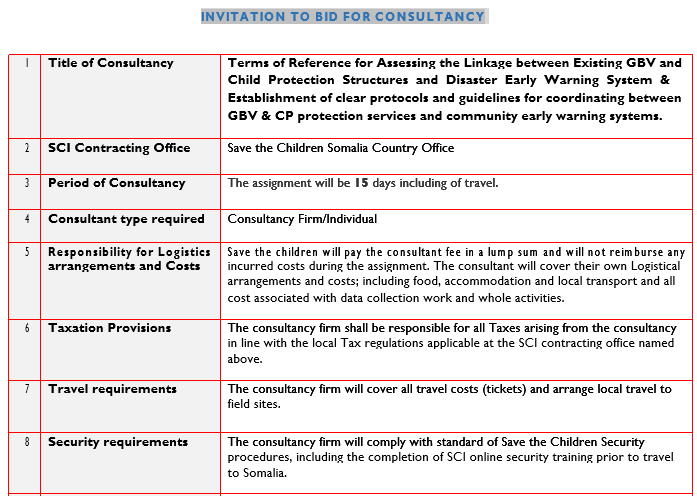
This consultancy will assess the existing linkages between Gender-Based Violence (GBV) and Child Protection (CP) structures and Disaster Early Warning Systems (EWS) and establish guidelines for coordinating GBV and Child protection services with community early warning systems. The assessment will first map existing community-based EWS in all targeted districts, assess the role of community-based structures in the early warning systems, explore opportunities to enhance linkages between EWS and GBV/child protection mechanisms, and establish guidelines for coordinating/integrating GBV&CP services with community early warning systems. The exercise will also map the data systems including alerts triggered by increases in violence or abuse cases; Sectoral Collaboration; as well as Gender-Responsive EWS. The findings will provide GASHAAN consortium and other like-minded organizations with crucial insights for designing programs that effectively link community-based child protection and GBV structures with disaster preparedness and response systems.
The main objectives of the consultancy include:
✓ Identify and map existing community-based early warning systems and the types of structures engaged in the EWS at the community level in GASHAAN project areas.
✓ Assess the current linkages (if any) between GBV and child protection structures and the disaster early warning systems.
✓ Identify gaps and opportunities for integrating community-based child protection and GBV mechanisms into disaster early warning and preparedness systems.
✓ Provide actionable recommendations for the consortium members to strengthen the linkage between GBV/child protection and early warning systems.
✓ Provide clear guidelines for coordinating/integrating GBV&CP services with community early warning systems
Key Assessment Questions The assessment will address the following key questions:
Community-Based Early Warning Systems
• What community-based early warning systems exist in general and specifically in the project target areas, and how do they operate?
• Which community-based structures (e.g., local committees, traditional leaders, women’s groups) are involved in these systems?
• To what extent are women, youth, PLWD and marginalized groups represented in these structures? How inclusive are these structures? What training did they received? Who supported the formation of these structures? How are they responding to GBV and child abuses in their respective areas?
• How effective are these structures in disseminating early warning information to the wider community?
Linkages Between EWS and GBV/Child Protection
• Are there existing linkages between the community-based GBV/child protection structures and the disaster early warning systems? If so, what are these linkages?
• How are GBV and child protection risks currently integrated into the disaster preparedness and response mechanisms at the community level?
What barriers exist that prevent the effective linkage of GBV and child protection structures with EWS?
Opportunities for Strengthening Linkages
• What opportunities exist to strengthen the link between GBV/child protection structures and early warning systems?
• What specific roles could GBV/child protection structures play in early warning and early disaster response at the community level?
• How can the Consortium and its members enhance coordination between child protection/GBV actors and disaster risk management actors?
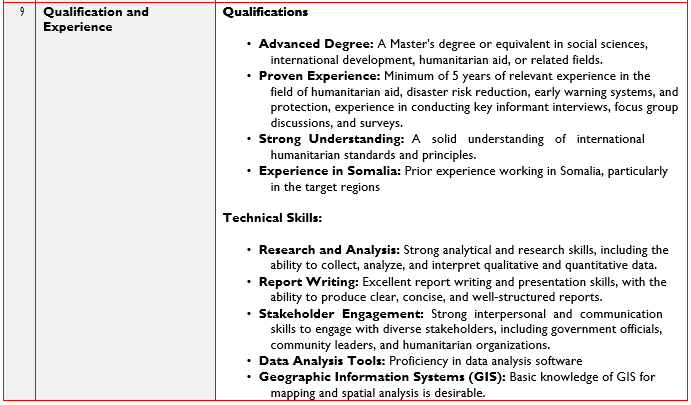
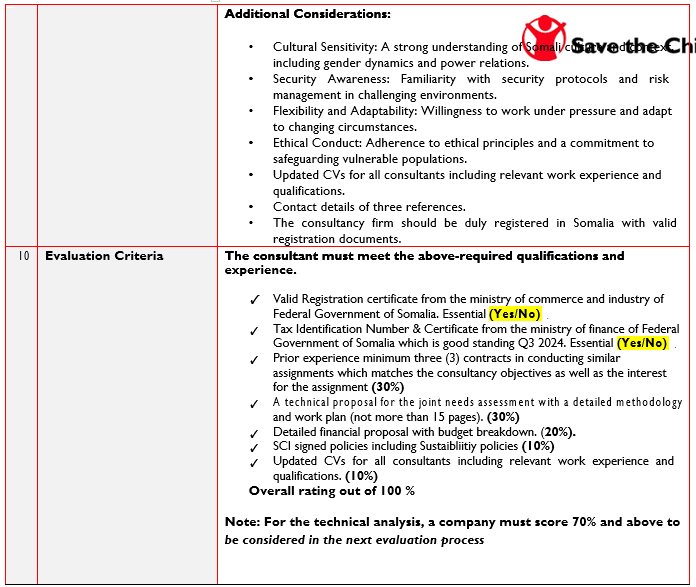
Skills and qualifications
Attachments
How to apply
Interested consultant (s) who meet the consultancy requirements are requested to submit their bid and each application package should include the above required minimum requirements.
Applications can be submitted by either:
Electronic Submission via ProSave (Recommended)
➢ Submit your response in accordance with the guidance provided in the below document:
• Bidders are encouraged to apply via Ariba system. Please request the Ariba link via email sending your company profile and Business registration certificate/CV. Please address your Ariba link request to [email protected]
Electronic Submission via Protected Email box (Optional)
• Email should be addressed to [email protected]
• Note – this is a sealed tender box which will not be opened until the tender has closed. Therefore, do not send tender related questions to this email address as they will not be answered.
• The subject of the email should be: Assessment of GBV and Child
Protection Linkages with Disaster Early Warning Systems and Development of Coordination Protocols.
• All attached documents should be clearly labelled so it is clear to understand what each file relates to.
• Emails should not exceed 15mb – if the file sizes are large, please split the submission into two emails.
• Do not copy other SCI email addresses into the email when you submit it as this will invalidate your bid.
• Your bid must be received, no later than 11th February, 2025
Application Submission address: indicating “” as the subject.
Bids must remain valid and open for consideration for a period of no less than 3 weeks