


 Facebook
 Twitter(X)
 LinkedIn
 Whatsapp
 Telegram
Tender description
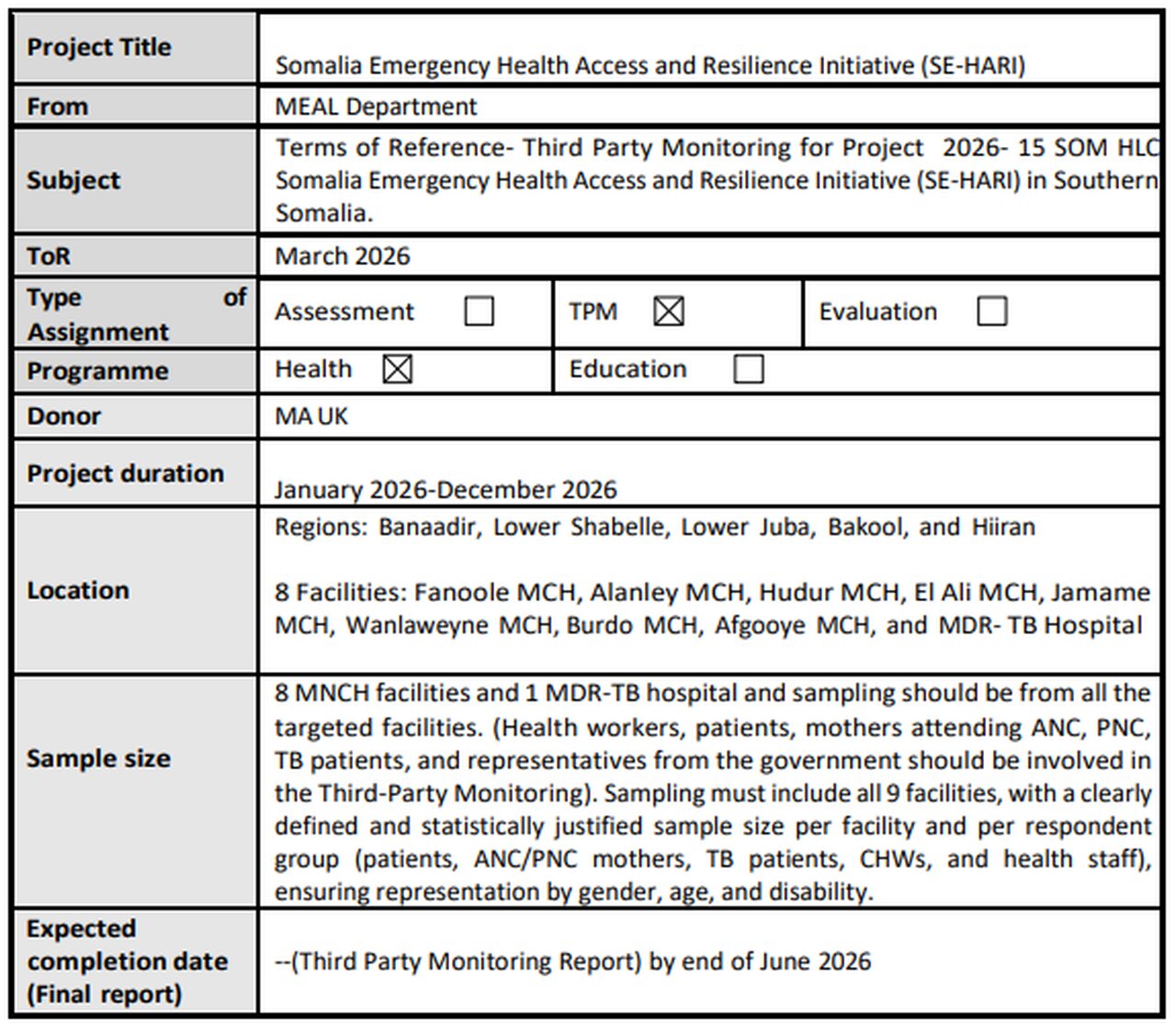
The Third-Party Monitoring (TPM) objectives include the following:
I. Independently verify the delivery and quality of health services across the 8 MNCH facilities
and 1 MDR-TB hospital by creating a table that indicates the status of all the activities and
services.
• Evaluate the quality, availability, and accessibility of ANC, PNC, and TB services from the
perspective of beneficiaries.
• Monitor delivery, quality and timeliness of maternal and child health service in the health
facilities including ANC, PNC, skilled delivery, and immunization.
• Identify gaps, trends and variations between facilities.
II. Verify the functionality and effectiveness of the referral system, by using a triangulation
methodology that includes facility records, referral registers, and beneficiary follow-up
interviews, including:
• Issuance and use of referral slips
• Referral tracking mechanisms at facility and CHW level
• Percentage of referred patients who complete treatment
• Follow-up processes conducted by CHWs
• Barriers to referral completion, including transport, cost, and access constraint
III. Verification ofthe staffseconded to the project and effective utilization ofsupplies provided
to health facilities by identifying gaps or deviations in service provision across health
facilities.
• On site verification on the end use of resources (medical supplies, pharmaceuticals,
facility running costs, general facility expenses)
• Assess whether staffing numbers and competencies are aligned with service delivery
needs.
IV. Verify availability and management of essential drugs and vaccines, including identification of
stock-outs, stock management practices, and supply chain challenges affecting service delivery.
V. Assess the coordination with other health actors and complementarity with other health
programme.
VI. Evaluate the quality of health services from the beneficiary perspective, including satisfaction,
perceived quality of care and key barriers/enablers to access
• Collect qualitative feedback from mothers and TB patients on their experience,
satisfaction, and barriers to accessing services.
• Collect qualitative and quantitative data from beneficiaries on the quality i.e.
(effectiveness, safety, timeliness, efficiency, patient centered, accessibility and
continuity of care) and satisfaction of service delivery in all the targeted facilities.
VII. Verify the progress on the project’s indicators that are part of the Logframe. Include all
indicators.
• Compare actual service delivery with programme targets (e.g., ANC visits, PNC check-ups,
TB treatment completion rates) and verify reported data against primary source
documents (HMIS registers, facility records, and patient records).
• Identify gaps, trends and variations between the health facilities. and variations between
facilities.
VIII. Measure patient waiting time and assess the effectiveness of queue management systems in
reducing waiting time, including average consultation waiting time and patient flow processes at
facility level.
IX. Verify the status and quality of rehabilitation works atsupported health facilities.
• Number/percentage of health facilities rehabilitated as per project standards
• Number of ramps constructed in the targeted health facilities
• Assess the quality of repairs and construction works of the ramps, wider doorways,
improved waiting areas, and privacy partitions
X. Assess the functionality and effectiveness of community-based outreach and health promotion
activities, including CHW engagement.
XI. Monitor and assess awareness, accessibility, utilization, effectiveness and use of feedback and
CRM and determine:
• % of beneficiaries aware of CFM
• % of beneficiaries using CFM
• Timeliness and quality of response
• Beneficiary trust in the system
• Percentage of facility-level complaints and feedback documented and resolved
• Determine the appropriateness and functionality of the Focal persons appointed for CFM
XII. Identify key implementation successes, gaps, and areas for improvement, and provide
actionable recommendations for programme improvement.
XIII. Verify the extent to which corrective actions from the 2025 Third Party Monitoring findings
have been implemented and are effective. This should include, but not be limited to:
• Accessibility improvements for PWDs (e.g., presence, quality, and usability of
ramps, widened doorways, and priority access mechanisms)
• Reduction in patient waiting times and effectiveness of queue management
systems (including measurement of actual waiting time and patient flow
processes)
• Availability and presence of female health staff, particularly in MNCH services
• Functionality of referral systems, including:
• Issuance of referral slips
• Referral tracking mechanisms
• % of referred patients completing treatment
• Follow-up by CHWs
• Availability and appropriateness of IEC materials (including relevance, visibility,
and beneficiary understanding)
• Availability of vaccines and essential drugs, including verification of stock-outs and
mitigation measures
• Functionality and utilization of Complaint and Feedback Mechanisms (CFM),
including:
• Awareness vs actual usage
• Accessibility of channels
• Timeliness of response
• Beneficiary trust
• Coordination with Ministry of Health and other stakeholders, including joint
supervision and reporting mechanisms
Attachments
How to apply
All Proposal (including proposal, CV, budget, evidence of experience) must be submitted
via email [email protected]
All interested applicants are requested to submit their proposal no later than May 4th
,2026